
Air fryer ovens have already come a long way. They move hot air around, follow staged temperature curves, and switch between crisping and gentler cooking without asking much from you. But the next chapter isn’t just about better algorithms inside the box. It’s about turning the air fryer oven into a cooking companion that can see, listen, learn, and fit into the way you actually live.
The next stop is intelligent, visual, and scenario-based cooking. And honestly, it’s already starting to happen.
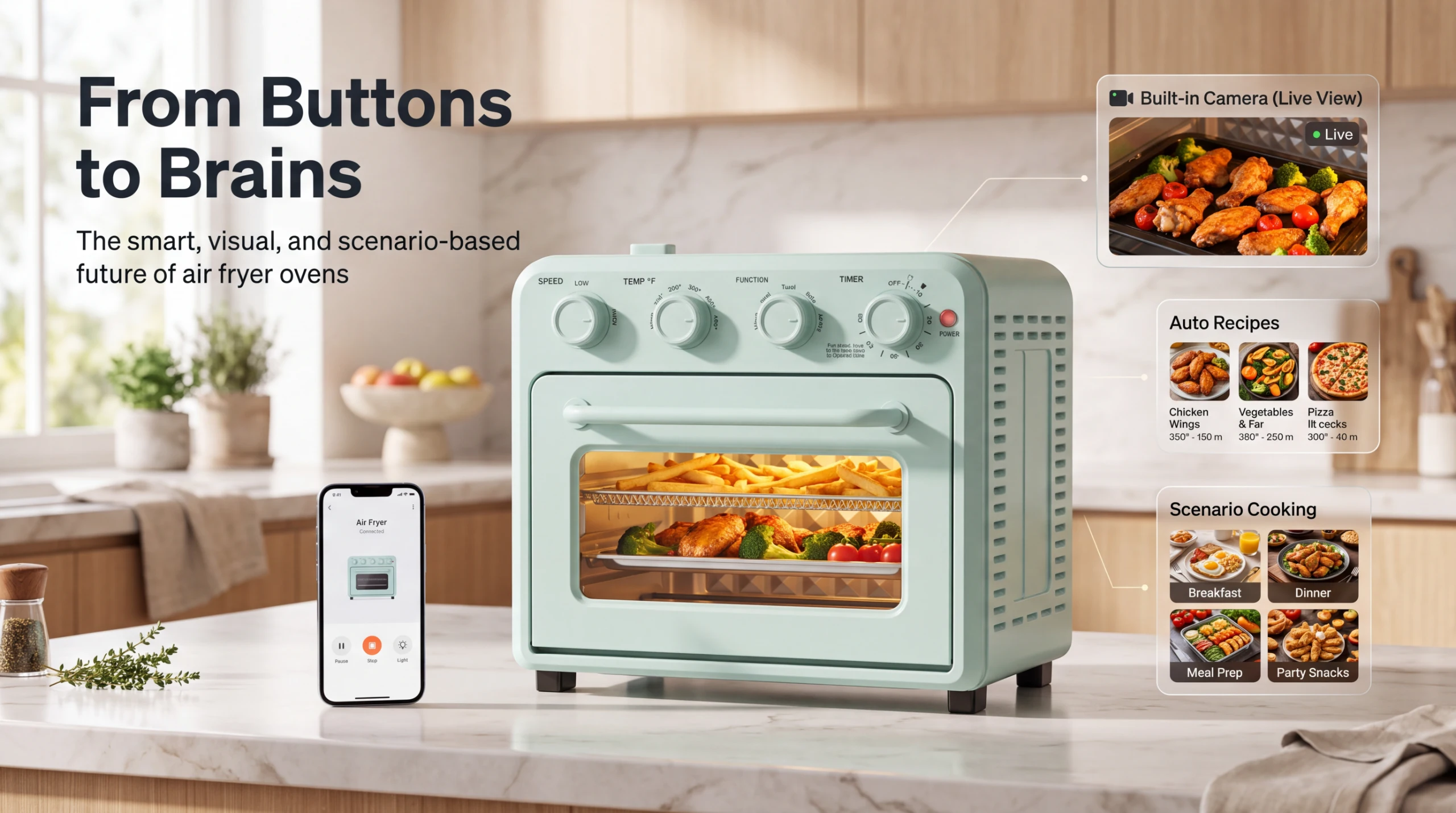
Table of Contents
From smart algorithms to smart experiences
The first wave of smart air fryer ovens was mostly about control. Sensors tracked temperature. PID loops kept the cavity steady. Presets handled the usual suspects: fries, chicken wings, vegetables. That alone was a huge upgrade from guessing times and temperatures in a traditional oven.
The next wave is about experience. Instead of picking a preset and hoping for the best, future air fryer ovens will walk you through the whole cook. They’ll suggest recipes, recognize food, adjust settings on the fly, and fit cooking into your daily routine. The appliance stops feeling like a tool and starts feeling more like a partner.
App control: the oven in your pocket
App control is already pretty common, but its role is growing. Soon, the app won’t just start or stop the oven. It’ll become the main hub for the whole cooking experience.
You might browse a recipe on your phone, send it to the oven, and let the appliance preheat on its own. The app could show step-by-step instructions, adjust the temperature curve for how crispy you like things, and ping you when the food is almost ready. It could also remember what worked and suggest small tweaks next time.
Firmware updates make this even more useful. A manufacturer can improve cooking algorithms, add new presets, or fix bugs without replacing the hardware. The oven gets better over time, just like your phone or a smart speaker.
Voice interaction: cooking without touching
Voice control is another piece of the puzzle. When your hands are covered in flour or oil, touching a screen is the last thing you want to do. Voice commands let you preheat the oven, change the temperature, set a timer, or ask how much time is left.
But voice interaction can do more than simple commands. A voice assistant could read out recipe steps, tell you when it’s time to flip the food, or suggest a lower temperature if the oven is already hot. It could also make cooking easier for people with visual impairments or limited mobility.
In a busy kitchen, voice control helps with multitasking, too. You can work on the next part of the meal while the oven handles the current one, checking in with a quick question instead of walking across the kitchen.
Built-in cameras: the oven that can see
One of the most exciting developments is the built-in camera. A camera inside the air fryer oven can show you the food as it cooks, stream video to your phone, and help the appliance detect what’s going on.
With computer vision, the oven could recognize the type of food, estimate its size, and watch for signs of browning. It could tell when fries turn golden, when chicken skin gets crisp, or when vegetables start to char. Instead of relying only on time and temperature, the oven could use visual cues to make real-time adjustments.
For users, that means less opening the door and less guesswork. You can check progress from another room. You can watch a time-lapse of the cook. You can even share a perfect result with friends or save the settings for next time. The oven becomes transparent, both literally and figuratively.
Automatic recipes: from guesswork to guidance
Automatic recipes are the natural next step. Instead of manually setting time and temperature, you can choose a dish and let the oven handle the details. The app might ask a few simple questions: How crispy do you want it? How much food are you cooking? Do you want it mild or well browned?
From there, the oven builds a custom cooking program. It can adjust fan speed, heating elements, and stage durations based on your answers. Some systems may even scan a barcode or recognize a package to pull up the right settings.
Over time, the oven can learn. If you always prefer extra crispy fries, the app can remember that. If a recipe works better with a slightly lower temperature, the system can update its recommendation. Cooking becomes more personal and more reliable.
Scenario-based cooking: meals that fit the moment
The most human part of this future is scenario-based cooking. People don’t cook in a vacuum. They cook breakfast before work, prep meals on Sunday, make a quick dinner for two, or host a party with friends. Each situation has different needs.
A scenario-based air fryer oven could recognize those moments. In the morning, it might offer quick breakfast options like toast, eggs, or reheated pastries. In the evening, it might suggest a fast dinner based on what’s in the fridge. For meal prep, it could guide batch cooking with multiple trays and staggered timings. For a party, it could help manage several snacks at once.
This is where smart home integration matters. The oven could sync with a calendar, a grocery list, or a fitness app. It could coordinate with other appliances. It could even adjust suggested recipes based on the weather, the time of day, or what you’ve chosen before.
What this means for the user experience
All of these technologies point in the same direction: less friction, more confidence, and better results.
You don’t need to understand PID control or duty cycling. You just want dinner to come out right. App control removes distance. Voice interaction removes barriers. Cameras remove uncertainty. Automatic recipes remove guesswork. Scenario-based cooking removes the feeling that the appliance is just another gadget to manage.
The best smart air fryer oven will feel less like a machine and more like a helpful kitchen companion. It will know what you like, adapt to what you have, and guide you when you need it. It will also stay out of the way when you just want to press start.
The road ahead: challenges and opportunities
There are still challenges. Cameras and sensors add cost. Connectivity raises privacy questions. Automatic recipes need large, accurate databases. Voice control has to work reliably in noisy kitchens. And over-automation can frustrate users who want more control, not less.
But the opportunity is huge. As smart kitchen appliances become more common, the air fryer oven is in a strong position. It’s already fast, convenient, and versatile. Adding intelligence, vision, and context makes it even more useful.
The next stop for air fryer ovens isn’t just a better appliance. It’s a more intuitive way to cook. It’s a kitchen that understands what you need, sees what’s happening, and helps you get the result you want—without making you think about the technology behind it.
That’s the real future of smart cooking: not more buttons, but less effort. Not more complexity, but more confidence. And not just a smarter oven, but a smarter way to feed people well.
