
Introduction
Let me give you a brutal truth from the trenches of global sourcing: A bad OEM partnership isn’t just a supply chain problem—it’s a strategic cancer. It delays your go-to-market, wrecks your brand reputation with early returns, and traps your cash in defective inventory.
“If you know the enemy and know yourself, you need not fear the result of a hundred battles.” In sourcing, the “enemy” isn’t the factory—it’s information asymmetry. They know their true defect rates, their engineering shortcuts, and their cash flow problems. You don’t.
That’s why I’ve distilled decades of hardware sourcing into 5 Non-Negotiable Checklists. This isn’t a “feel-good” vendor evaluation. This is a surgical audit based on first principles: Does this partner have the physics, the data, and the discipline to turn your platform into a market winner?
Let’s audit.
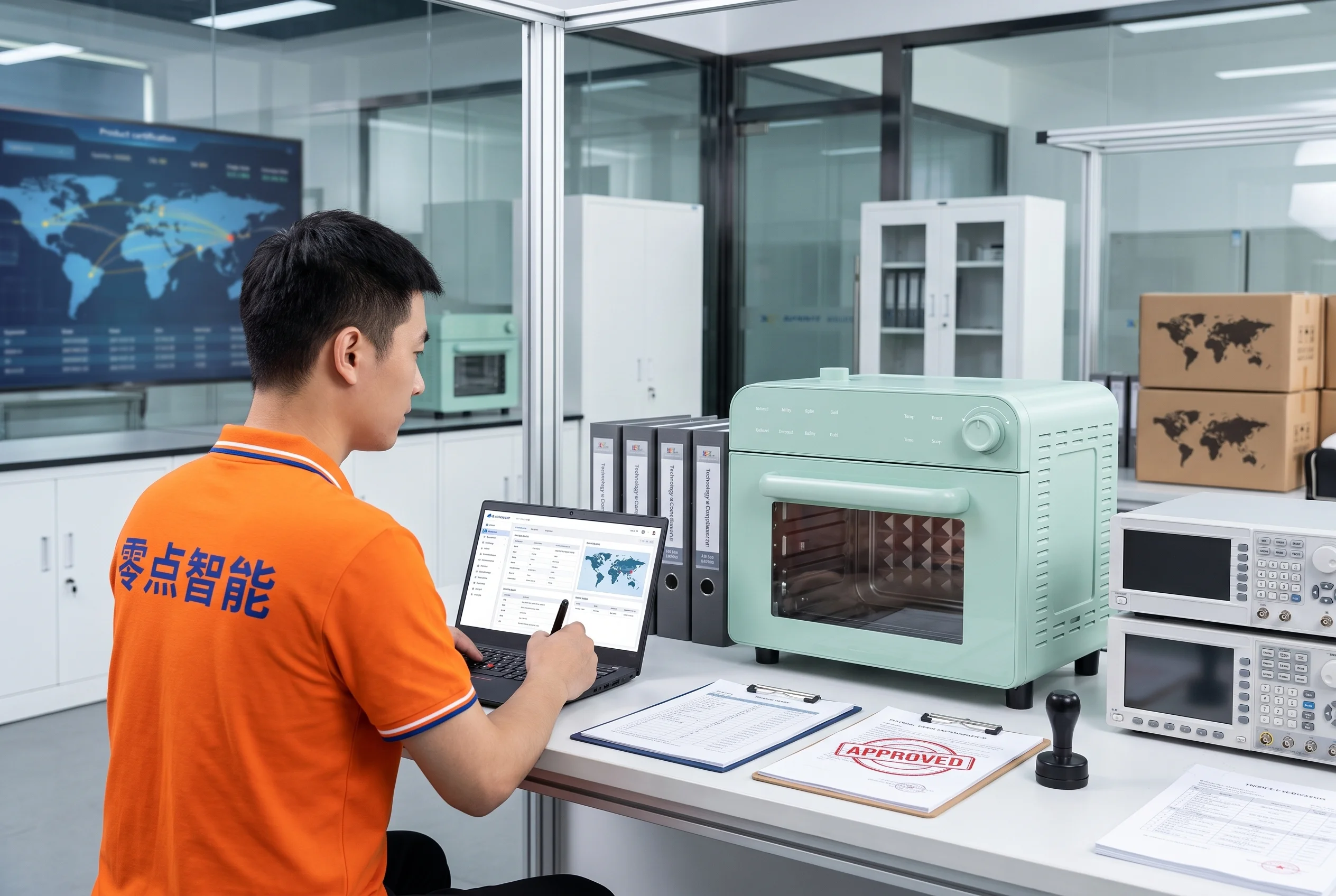
Table of Contents
Checklist 1: Engineering Capability – “The Thermodynamic Brain”
Don’t ask: “Can you make this?” That’s like asking a chef if he can boil water. Every factory can.
Ask instead: “Show me your thermal simulation records.”
Great engineering starts before the first piece of metal is cut. It happens in the digital space—using Computational Fluid Dynamics (CFD) to model heat flow, airflow turbulence, and PID algorithm response.
What to verify:
- CFD/Simulation Software: Do they use Ansys, FloTHERM, or equivalent? Ask for simulation reports from their last 3 projects. Look for evidence that they optimized airflow before tooling, not after.
- Patent Portfolio: How many utility patents (not just design patents) do they hold for heating systems or fan blade geometry? This isn’t vanity—it’s proof they innovate at the system level.
- Algorithm Team: Do they have in-house firmware engineers? Or do they outsource the PCB coding to a third party? If they outsource the algorithm, walk away. You need a partner who owns the “brain” of your product.
The Golden Rule: If their engineering team can’t explain to you, in plain English, why a 220V heater behaves differently than a 110V one in a confined cavity, they don’t understand thermal physics. And physics will always beat wishful thinking.
Checklist 2: Quality Control System – “The Immune System”
Everyone claims “ISO 9001.” That’s table stakes. I’m interested in the Field Failure Rate (FFR) —specifically, the ≤1.2% on-site return rate benchmark.
Why 1.2%? Because in the small appliance industry, the average for air fryer ovens is around 2.5%–3.5%. A partner hitting ≤1.2% is operating at world-class Six Sigma levels for this category. They’re protecting your Amazon reviews and your DTC brand reputation.
What to verify:
- Statistical Process Control (SPC): Do they monitor real-time production deviations on the line? Demand to see their CPk (Process Capability Index) data for critical dimensions (cavity flatness, door hinge torque).
- The “Burn-In” Protocol: How long do they stress-test each unit before packaging? The elite factories run a 20–30 minute functional burn-in on 100% of units, not just a random sample.
- Traceability: Can they trace a defect back to the specific batch of heating tubes and the operator who installed them? If their system is “batch and lot” traceable, they can quarantine problems before they reach your warehouse.
The War Room Strategy (Buffett & Munger Lens): Quality is the ultimate cost saver. Every 1% reduction in return rate saves you not just the unit cost, but the logistics, refurbishment, and lost customer acquisition cost (CAC) . A high-quality partner is an investment, not an expense.
Checklist 3: Certification & Compliance – “The Global Passport”
If you can’t sell it, you can’t ship it. This is where procurement novices get burned. They check for a single CE mark and assume everything is fine.
In reality, you need a complete “Compliance Package”:
- North America: ETL (preferred over UL for speed) and CUL for Canada. Also, check for FCC compliance for the smart/connected variants.
- Europe: CB Scheme certificate (the global foundation), plus CE-LVD (Low Voltage Directive) and CE-EMC (Electromagnetic Compatibility). Don’t forget RoHS and REACH for materials.
- Energy Efficiency: Does the factory have DOE (Department of Energy) compliance data for the US market? Many brands forget this and get hit with costly holds at the port.
Key Question: “Does the series certification cover our platform variants, or do we need to pay for re-testing for each capacity size?”
If they’ve designed their platform properly (like we discussed in the previous article), the series certification should cover the entire family. If they don’t understand this concept, they aren’t a “platform” partner—they’re a “single mold” factory.
Checklist 4: Manufacturing & Production Capacity – “The Digital Skeleton”
Forget the glossy showroom with the fancy chandelier. Walk past it into the production floor. I’m not looking for cleanliness (though that matters). I’m looking for MES (Manufacturing Execution System).
An MES-connected factory is the difference between “artisanal craftsmanship” and reproducible engineering.
What to verify:
- Digital Dashboards: Are there screens on the line showing real-time throughput, defect rates, and OEE (Overall Equipment Effectiveness)? If data isn’t flowing digitally, it’s a “legacy” factory.
- Automated Testing: Do they use automated jigs for functional testing, or does a worker manually click buttons? Automated testing removes human error from the quality loop.
- Capacity Buffer: Ask for their installed capacity vs. actual utilization. If they’re running at 95% capacity, your order will be delayed when a spike comes. Look for a partner with 70–80% utilization—enough volume to be efficient, but enough slack to prioritize you.
The First Principles View (Elon Musk): You don’t want a factory that assembles parts. You want a factory that integrates the process. If they own their own sheet-metal stamping, injection molding, and PCB assembly in-house, the supply chain risk drops dramatically. If they outsource all that, they’re just a middleman with a screwdriver.
Checklist 5: Project Management & Communication – “The Neural Network”
This is the one I save for last—but it’s the one that kills more deals than quality issues.
You can fix a defective heater. You cannot fix a partner who ghosts you for 72 hours when you need a last-minute sample.
What to verify (The “Tess & Wang Sheng” Test):
- PM Response Time: In the negotiation phase, send an urgent technical question on a Friday evening (their time). How long do they take to reply? The best partners have 24/7 monitoring for key accounts.
- Language & Documentation: Do they provide clear, grammatically correct English (or your target language) BOMs, technical drawings, and QC reports? If you have to interpret “Chinglish” on a critical spec, you’re signing up for constant friction.
- Project Management Methodology: Do they assign a dedicated PM who uses a structured system (like Asana, Jira, or even a Gantt chart)? Or do they “just remember” everything in a spreadsheet? Formalized communication signals maturity.
- Sample Lead Time: What is their commitment for T0 (first-off tooling) samples? A world-class partner delivers T0 samples in 25–30 days. Anything over 45 days suggests their toolroom is overloaded.
The Negotiation Hack (Sun Tzu’s “Art of War”): During initial conversations, deliberately change one minor spec (e.g., door color from black to silver) and see how they handle the variance. Do they panic? Do they charge a massive fee? Or do they calmly recalculate and come back with a professional quote? Their response to “variation” predicts how they’ll handle real crisis management during mass production.
Conclusion: Choose an “Arms Supplier,” Not a “Parts Dealer”
My friend, in the battle for market share, your OEM is your weapons manufacturer. You don’t choose an arms supplier based on the prettiest showroom or the lowest initial bid—you choose them based on strategic alignment, engineering depth, and battle-tested resilience.
The 5-Point Audit Summary:
- Brain: Thermal simulation & in-house algorithm.
- Immunity: ≤1.2% FPR & statistical process control.
- Passport: Series certification (ETL/UL/CE/CB).
- Skeleton: MES digital factory & in-house core processes.
- Nerves: Dedicated PM & rapid response.
Remember, the “cheapest” quote always comes with a hidden price tag—in delayed timelines, failed certifications, or mountains of customer returns. Pay the premium for the top 5% of OEMs. It will pay for itself in your first 6 months of sales.
Now, take this checklist and turn it into a scorecard. Grade your potential partners ruthlessly. If they score below 4 out of 5, don’t walk—run.
Your next step: Ready to screen a specific factory? Send me their profile or your quote sheet, and let’s pressure-test it together. I’m in your corner.
