
Introduction: Same Machine, Different Worlds
The numbers are impressive – $2.75 billion in 2025, steady growth ahead. But here’s the reality check: what sells in Texas may tank in Tokyo.
Scaling globally means respecting local differences. A consumer in Chicago has different priorities than one in Berlin or Bangkok. Kitchen sizes, energy bills, cooking habits, and daily routines all shape what people want from an air fryer oven.
“Know your enemy, know yourself.” In this game, the real enemy is blind assumptions. Today, we’re decoding what each major market actually craves – so you can design, price, and market with confidence everywhere.
Let’s get into it.
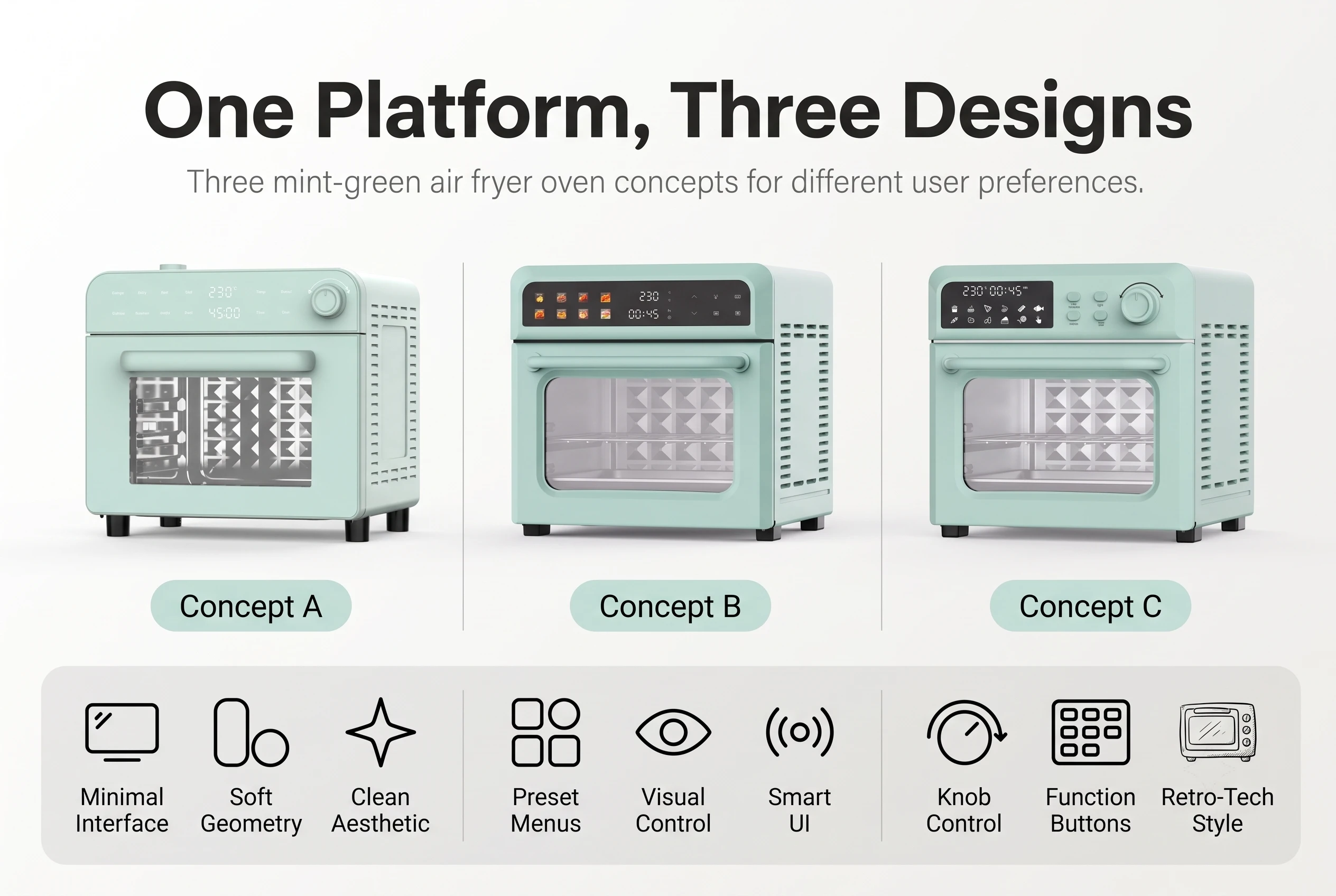
Table of Contents
Part 1: North America – Go Big or Go Home
The mindset: Americans don’t buy appliances – they buy time-savers and status symbols.
The reality check: Kitchen countertops are huge. Nobody’s squeezing for space. They see countertop ovens as permanent residents, not temporary guests.
What they actually want:
- Big capacity – oven replacement or bust
North Americans want to ditch their full-size oven. They want to roast a whole chicken, bake a 13-inch pizza, or toast six slices at once. Brands like Ninja built their reputation on this exact need – massive capacity, no compromise.
- All the functions – the “does everything” claim
Eight functions? Twelve? The more, the better. Air fry, bake, broil, toast, grill, reheat, dehydrate – if it’s not on the dial, they’ll buy the one that has it. The message that works: “One machine, five appliances.”
- Willing to pay for trust
Americans drop $200–$300 on a trusted brand without blinking. The U.S. small kitchen appliances market hit $5.32 billion in 2024, and quality sells. They’ll pay more if they believe it’ll last.
Quick summary for brands:
| Factor | North American Priority |
|---|---|
| Capacity | 18L+ – no exceptions |
| Functions | 8+ modes – the more the merrier |
| Design | Just make it work |
| Efficiency | Nice bonus, not the main show |
| Smart Features | Getting there – apps are coming |
| Price | $150–$300 – they’ll pay for quality |
Part 2: Europe – Less Space, More Taste
The mindset: Europeans buy investments, not toys. Every inch of countertop must earn its keep.
The reality check: Kitchens are smaller. Electricity costs more. And consumers care deeply about the planet their food comes from.
What they actually want:
- Energy efficiency – the dealmaker or breaker
In Europe, this isn’t a selling point – it’s a prerequisite. German brand Caso Design launched a model that cuts energy use by 70% compared to traditional ovens. That’s the kind of number that sells itself. The air fryer boom in Europe (6.8% CAGR) is driven largely by lower energy bills and healthier cooking. Two wins, one machine.
- Compact, beautiful – because there’s nowhere to hide
Small kitchens demand smart design. The Tiny Living movement has made aesthetics non-negotiable. If it’s ugly, it doesn’t matter how well it cooks – it’s not staying on the counter. Steam functions, sleek lines, minimal footprints – that’s what wins shelf space.
- Sustainability – not just a buzzword
Europeans care about waste, materials, and carbon footprints. EU rules like Ecodesign are actively pushing the worst-performing products off shelves. If your model isn’t energy-smart, you’re not getting listed. Period.
- Health – a rising tide
Obesity rates are climbing across Europe – 61% in Ireland, the highest on the continent. That’s pushing more people toward home cooking and healthier appliances. Italians and Spaniards are also investing heavily in smart kitchen upgrades, which only helps air fryer adoption.
Quick summary for brands:
| Factor | European Priority |
|---|---|
| Efficiency | 70% savings? Put it on the box |
| Size | 10–14L – compact is king |
| Design | Sleek or sorry – no ugly units |
| Functions | Keep it focused, not cluttered |
| Smart Features | Growing – IoT sensors are stepping in |
Part 3: Asia – Small, Smart, and Serious Value
The mindset: Asian buyers want maximum function in minimum space – and they want it to talk to their phone.
The reality check: Apartments are measured in square meters, not square feet. Tech adoption is through the roof. Price sensitivity is real, but people pay for quality that fits their life.
What they actually want:
- Compact size – because every inch counts
In Tokyo, Shanghai, or Mumbai, counter space is gold. Consumers want a tiny powerhouse that does everything, takes almost no room, and doesn’t clutter the kitchen. Products like the Aouball flip-top design show exactly this direction – one device that air fries, cooks on top, and folds away.
- Smart features – not a luxury, an expectation
Asia leads the world in smart home adoption. Chinese, Japanese, and Korean consumers expect app control, voice integration, and personalized presets. Cosori’s Wi-Fi model with hundreds of app-based recipes is a perfect example. IoT sensors aren’t a “future trend” here – they’re already the baseline.
- All-in-one versatility – one device, many meals
They want a machine that air fries, roasts, bakes, stir-fries, steams, and boils – all within the same compact frame. Why buy four appliances when one can do it all? That’s the winning logic in space-scarce homes.
- Value for money – premium features, accessible prices
Asian consumers are smart shoppers. They’re willing to invest in quality, but the price-to-performance ratio has to be undeniable. China alone is the world’s biggest market for air fryer ovens, and competition is fierce. Brands that deliver premium without the premium price tag win the race.
Quick summary for brands:
| Factor | Asian Priority |
|---|---|
| Compact Size | Non-negotiable – small is survival |
| Smart Features | Must-have – apps and voice are expected |
| Versatility | 7+ functions in one footprint |
| Design | Functional first, pretty second |
| Efficiency | Growing – but space and smart come first |
| Price | Strong value – no overpricing accepted |
Part 4: Side-by-Side Comparison
| Dimension | 🇺🇸 North America | 🇪🇺 Europe | 🌏 Asia |
|---|---|---|---|
| Primary Driver | Convenience & versatility | Efficiency & design | Space & smart tech |
| Preferred Capacity | 18L+ (big and bold) | 10–14L (space-savvy) | 8–12L (ultra-compact) |
| Key Feature | 8+ cooking functions | 70%+ energy savings | App + multi-function combo |
| Design Priority | Practical | Beautiful | Practical |
| Smart Integration | Catching up | Growing steadily | Already expected |
| Price Tolerance | High – they’ll pay up | Medium – value matters | High – but demand value |
| Market Share (2025) | 26.5% | ~20% | 38.2% |
Part 5: One Platform, Three Personalities
This is where it all comes together – and where our earlier platform architecture strategy becomes your superpower.
Instead of building three entirely different products, you build one core engine and wrap it in three different “personalities”:
- North America: Bigger cavity, extra presets, bold branding, higher price tag.
- Europe: Compact cavity, efficiency-tuned algorithms, minimalist design, energy label upfront.
- Asia: Ultra-small footprint, full app and voice integration, competitive pricing.
Same guts. Different skins. That’s how you go global without tripling your R&D costs.
Conclusion
My friend, this market is heading toward $8 billion by 2035. That’s a massive opportunity – but only if you understand that Dallas, Düsseldorf, and Delhi want very different things.
Americans want a big, bold oven replacement.
Europeans want a compact, beautiful, energy-saver.
Asians want a tiny, smart, all-in-one value machine.
One product won’t satisfy all three. But one smart platform – thoughtfully adapted – absolutely can.
So map your strategy to the map of the world. Your global customers are ready.
