
Developing a custom air fryer oven can cost a few thousand dollars for a straightforward modification of an existing model, or tens to hundreds of thousands of dollars for a product that requires new engineering, tooling, software, and certification work. The difference comes down to how much of the appliance already exists and how much your brand needs to change.
For importers, retailers, and private-label kitchen appliance brands, the first decision is not simply how much to spend. It is which development route makes commercial sense. A new housing color, branded control panel, and customized packaging require a very different investment from a redesigned airflow system, a new heating architecture, or a completely original product.
This guide explains the main cost components, compares practical development options, and shows how to prepare a quotation request that gives manufacturers enough information to provide a meaningful estimate.
What Is the Typical Cost of Developing a Custom Air Fryer Oven?
There is no universal development price for a custom air fryer oven. A supplier may already have a validated product platform, while another project may require the manufacturer to develop the mechanical structure, heating system, control logic, and production tooling from the beginning.
For initial budgeting, the following figures can be used as illustrative planning ranges, not verified industry averages or supplier quotations. Actual costs depend on the product specification, factory capabilities, target market, and commercial agreement.
| Development route | Illustrative upfront budget | Typical scope |
|---|---|---|
| Private-label customization | $1,000–$5,000 | Logo, standard color options, packaging artwork, and minor changes |
| Existing-platform adaptation | $5,000–$20,000 | Housing modifications, interface changes, selected features, and validation |
| Substantial product redesign | $20,000–$80,000 | New structural components, control changes, custom parts, and additional testing |
| New product architecture | $80,000–$250,000+ | Extensive engineering, new tooling, control development, prototypes, and broader validation |
These ranges are starting points for budgeting rather than fixed price bands. Some projects fall outside them, particularly when several product variants, extensive testing, specialized materials, or new manufacturing processes are involved.
The quoted development fee also needs to be separated from the unit manufacturing price. Production costs, freight, import duties, taxes, third-party testing, and any tooling ownership arrangements may be charged separately.
For a buyer developing a first product line, the most useful question is therefore: How much new engineering does this product actually require?
Which Development Route Offers the Best Value?
The development route determines much of the upfront investment, project duration, and technical risk. Before requesting a quotation, decide whether your competitive advantage depends on a new product architecture or on a differentiated version of an established design.
Option 1: Private-Label Customization
Private labeling is generally the simplest route. The manufacturer supplies an existing air fryer oven, and the buyer customizes its brand identity and market presentation.
Typical changes include:
- Printed or laser-marked brand logos.
- Standard housing colors or finishes.
- Customized retail cartons and instruction manuals.
- Brand-specific accessories selected from existing options.
- Minor packaging or labeling changes.
This approach works well for importers testing a new category, retailers expanding their product ranges, and online brands that want to validate demand before committing to extensive product development.
Its main limitation is differentiation. If several brands purchase the same underlying model, packaging and marketing alone may not provide a lasting competitive advantage.
Option 2: OEM Development Based on an Existing Platform
An existing-platform OEM project offers a middle ground between a standard private-label product and a completely new design.
The manufacturer may retain the core heating system, airflow structure, electrical architecture, and major tooling while modifying selected components to meet your requirements.
Possible modifications include a redesigned control panel, updated exterior styling, a different cavity size within validated design limits, or selected functional upgrades.
This route can reduce development expenditure because the project reuses proven engineering. However, every change still needs an appropriate review. A modification that affects heat distribution, electrical loading, clearances, or thermal protection can require additional engineering and testing.
The best candidate is a product that needs meaningful differentiation without requiring a new technical foundation.
Option 3: Fully Customized Product Development
A fully customized air fryer oven makes sense when the product concept cannot be achieved through an existing platform.
Examples include a distinctive door structure, a substantially different cavity layout, a new user interface, specialized cooking modes, or a redesigned airflow and heating system.
The project may involve:
- Product requirements and feasibility analysis.
- Industrial design and mechanical engineering.
- Electrical and thermal design.
- Prototype fabrication and assembly.
- Cooking-performance and safety validation.
- Tooling development and production trials.
- Compliance testing and mass-production approval.
The advantage is greater control over product identity and performance. The trade-off is a higher upfront investment, more development decisions, and a greater chance of design changes before production approval.
A fully custom design should be justified by a specific commercial benefit, such as a differentiated user experience, a performance requirement competitors cannot meet, or a product architecture that supports a broader range of models.
What Factors Determine Air Fryer Oven Development Cost?
1. Product Design and Engineering
Engineering costs depend on how much design work is required and how many changes the project undergoes before the design is approved.
A logo change or cosmetic adjustment is relatively straightforward. A redesigned door hinge, new internal airflow path, different heating element arrangement, or altered thermal protection system requires more engineering effort.
Buyers should also consider design maturity. A detailed specification and approved reference sample give the factory a clearer starting point. A concept described only as “a premium air fryer oven with better cooking performance” leaves major decisions unresolved.
To control costs, define the required functions and performance targets before the engineering quotation is finalized.
2. Tooling and Mold Development
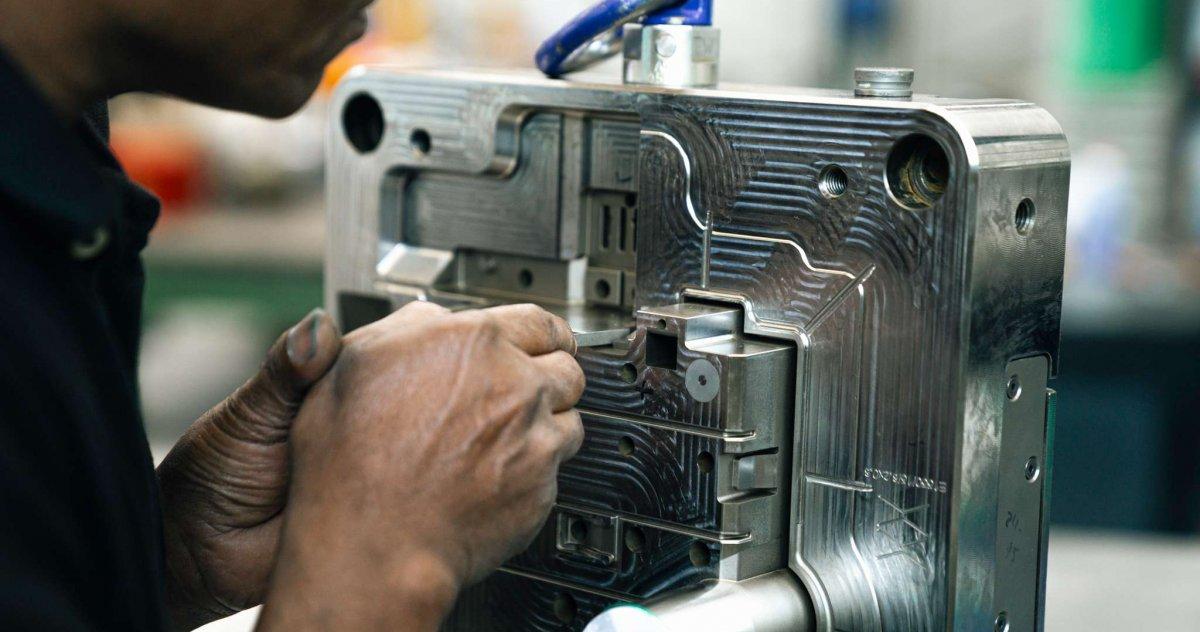
Tooling can become a major cost when the project introduces new plastic components, custom handles, control-panel parts, or other components that require dedicated molds.
The final cost depends on the number of unique components, their geometry, material, mold construction, expected production volume, and required service life.
Not every custom component requires a new mold. Some changes can use existing tooling, interchangeable mold inserts, or modified components. The manufacturer should identify which parts genuinely require new tooling rather than treating every design change as a separate mold project.
Ask the supplier to itemize:
- New molds and fixtures.
- Mold modifications and replacement inserts.
- Prototype tooling, if applicable.
- Tool maintenance and expected service life.
- Tool ownership, storage, and transfer conditions.
Tooling ownership deserves particular attention. A low initial quotation may not be commercially attractive if the buyer cannot access or transfer the tools when changing manufacturers.
3. Heating System and Airflow Development
The heating system is one of the most technically significant parts of an air fryer oven.
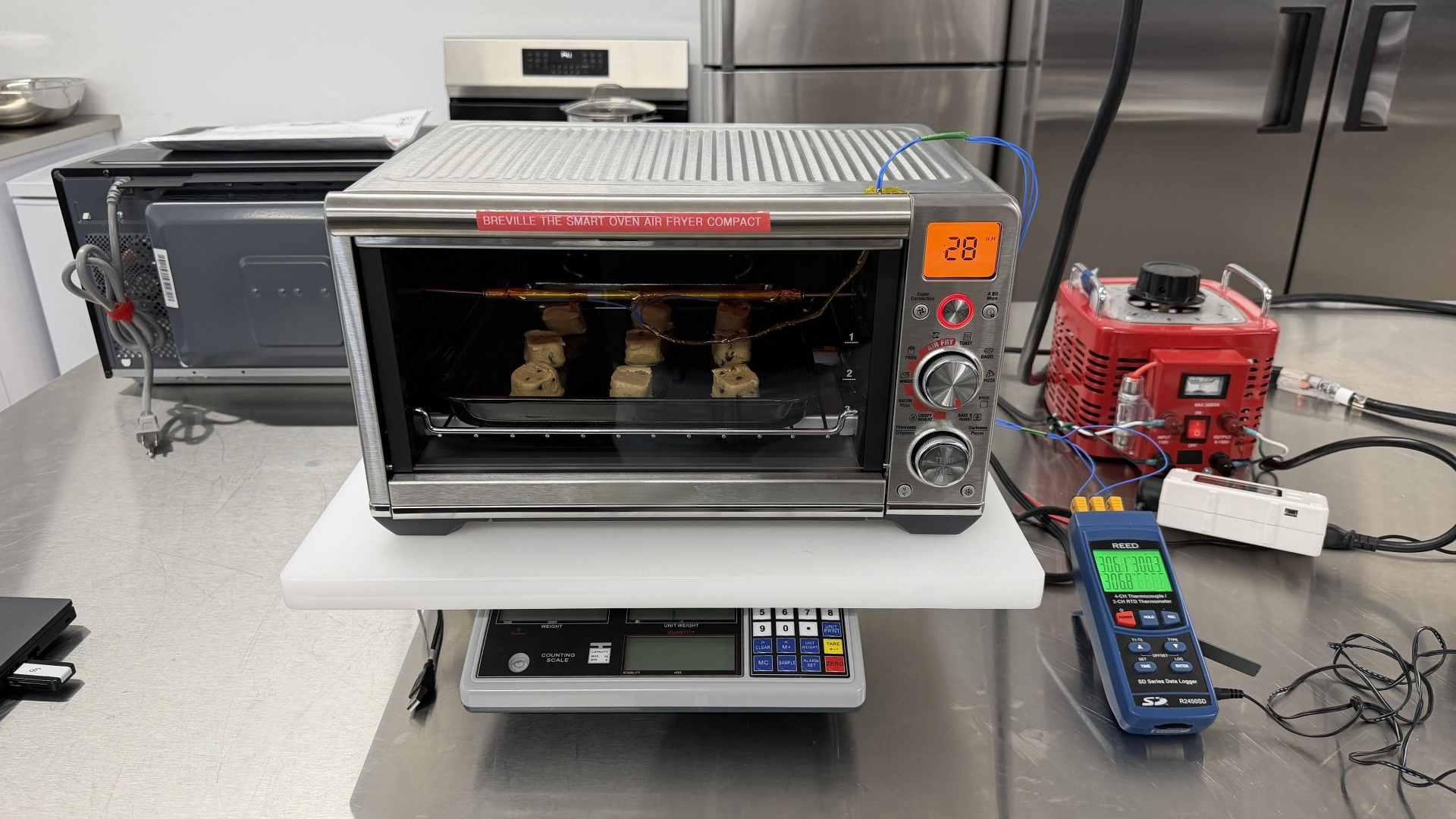
The heating elements, fan, cavity geometry, rack positions, air inlets, and exhaust paths interact to determine how heat reaches the food. Changing one component may affect temperature distribution, cooking time, browning, noise, and energy consumption.
For example, a buyer requesting more uniform cooking across multiple rack levels may need more than a stronger fan. The supplier may need to evaluate airflow restrictions, fan geometry, heater placement, cavity dimensions, and the control strategy.
This is where an existing platform can offer a substantial advantage. If the factory has already validated a suitable heating and airflow architecture, the project may require targeted adjustments rather than a complete redesign.
The buyer should define measurable acceptance criteria, such as temperature variation under specified test conditions, cooking performance across rack positions, and recovery time after the door opens. The factory and buyer should agree on the test method before development begins.
4. Control Panel, Electronics, and Software
The control system affects both development cost and product usability.
A mechanical-control model with a simple timer and temperature selector generally has a different development scope from a digital oven with a touchscreen, multiple cooking presets, temperature sensors, and software-controlled heating cycles.
Costs can increase when the project requires:
- A new PCB or electronic control architecture.
- Custom display hardware or interface components.
- New cooking algorithms and preset programs.
- Sensor calibration and fault handling.
- Firmware changes and additional validation.
- Connectivity features or application integration.
A common budgeting mistake is to treat a software change as a cosmetic feature. A new preset may require cooking trials, adjustments to temperature and timing, and verification that the appliance behaves safely under relevant operating conditions.
If the product is intended for a price-sensitive market, a simpler interface may deliver a better commercial result than an expensive touchscreen that customers rarely use.
5. Materials, Finish, and Exterior Design
The materials and finishes chosen for the housing, door, handles, control panel, and accessories influence component costs, manufacturing processes, and quality requirements.
A standard painted-metal housing may be less expensive to implement than a new finish requiring specialized surface preparation or additional production controls. Stainless steel, decorative coatings, special colors, and integrated display surfaces can all change the cost structure.
The important distinction is between a change in appearance and a change that affects product performance or manufacturing.
A new color may require color matching, sample approval, and process validation. A redesigned housing can also affect ventilation openings, internal clearances, heat exposure, and assembly procedures.
Ask for physical finish samples and agree on acceptable color variation, surface defects, and inspection conditions before approving mass production.
6. Testing and Market Compliance
Compliance costs depend on the target market, product classification, electrical design, and testing already completed on the underlying platform.
A supplier may have existing test reports or certifications for a related model. Those documents can help establish a starting point, but they should not be assumed to cover a modified product automatically.
For example, a change to the heating system, control board, power rating, insulation, or enclosure may affect the testing scope. The certification body or qualified testing laboratory should determine which evaluations are required.
The IEC 60335-2-9 standard addresses safety requirements for portable household cooking appliances, including air fryers. Applicable requirements must be evaluated alongside the relevant general safety standard and the rules of the destination market.
For North American sales, buyers should confirm the applicable electrical safety requirements and the acceptance of the proposed certification or listing with their customers, retailer, and testing provider. Requirements for Europe and other markets should be assessed separately.
Request a written breakdown of:
- Testing and certification fees.
- Sample quantities and preparation costs.
- Laboratory charges and retesting provisions.
- Documentation and labeling requirements.
- Any additional work caused by product modifications.
Do not assume that a certificate for one model automatically covers another model with a different electrical or mechanical design.
7. Prototypes, Samples, and Design Revisions
Prototype costs include more than the physical sample. Engineering labor, temporary tooling, component procurement, assembly, shipping, and repeated testing may all contribute.
A project can become expensive when the first prototype is built before key requirements have been agreed. For example, changing cavity dimensions after the heating system has been selected may affect the enclosure, fan arrangement, thermal behavior, and tooling.
A better approach is to separate development into review stages:
- Concept review: Confirm dimensions, functions, target price, and feasibility.
- Engineering sample: Evaluate construction, assembly, and preliminary operation.
- Performance validation: Test cooking results, temperature behavior, and user functions.
- Pre-production sample: Confirm the production configuration, appearance, packaging, and inspection criteria.
Each stage should have written acceptance requirements. The supplier should also clarify how many revision rounds are included in the quoted development fee.
8. Packaging and Logistics Preparation
Packaging is sometimes overlooked during product development, even though it affects retail presentation, shipping protection, and total landed cost.
A custom carton may require new artwork, structural design, inserts, and drop-test validation. Accessories and manuals must fit securely without increasing the package dimensions unnecessarily.
For export projects, packaging should be evaluated as part of the complete distribution route. A carton that performs adequately during local handling may not provide sufficient protection for a longer international journey involving multiple handling stages.
Packaging development should therefore cover product protection, carton dimensions, shipping configuration, labeling, and any retailer-specific requirements.
How Do Customization Options Affect the Budget?
The following comparison helps buyers identify where customization is likely to increase costs.
| Customization item | Relative development impact | Main cost consideration |
|---|---|---|
| Logo and standard packaging | Low | Artwork, printing, and minimum order quantities |
| New housing color | Low to moderate | Color matching, finish samples, and production setup |
| Customized control panel | Moderate | Interface components, artwork, electronics, and validation |
| Additional cooking presets | Moderate | Software changes and cooking-performance testing |
| Different cavity dimensions | Moderate to high | Mechanical design, airflow, heating, and tooling changes |
| New door or housing structure | High | Engineering, tooling, thermal clearances, and assembly |
| Redesigned heating and airflow system | High | Thermal engineering, prototypes, and performance validation |
| New electronic architecture | High | PCB development, firmware, safety evaluation, and testing |
These categories are relative rather than fixed price quotations. A seemingly small change can have a larger impact if it affects a safety-critical component or requires new tooling.
Can an Existing Air Fryer Oven Platform Reduce Development Costs?
Yes. A suitable existing platform can reduce the amount of new engineering required, shorten the development process, and lower the number of design decisions that must be validated.
However, platform reuse only creates value when the existing product matches the intended market and performance requirements.
For example, the Linden KA1205 compact countertop oven is a 12-liter model with six cooking functions, mechanical controls, and a 1,400 W rated power specification. It may provide a useful starting point for a compact product concept.
For a mid-sized product, the Linden AA1602 electric oven with air fryer offers a 16-liter capacity, six cooking functions, mechanical controls, and a 1,400 W rated power specification.
Brands targeting larger cooking capacity can evaluate the Linden AE3005 large-capacity convection oven, which has a 30-liter cavity, touch-panel controls, and a rated power of 1,700 W.
These models illustrate different starting points, not guaranteed development quotations or proof that every requested modification can use the existing design without further testing.
Before selecting a platform, ask the manufacturer which components can remain unchanged, which parts need modification, and which changes would trigger additional validation.
Linden’s air fryer oven OEM/ODM services describe a platform-based development approach that separates core systems from customizable exterior and interface elements. For buyers, the relevant question is how much of the proposed design can actually be reused and what the factory will charge to adapt it.
OEM vs. ODM: Which Model Is More Cost-Effective?
OEM and ODM are often used loosely in supplier discussions, so buyers should compare the actual scope of work rather than relying on the label alone.
In a typical OEM arrangement, the buyer provides or specifies the design and the manufacturer produces it. In an ODM arrangement, the manufacturer contributes an existing design or product platform that the buyer can adapt for its brand.
| Decision factor | OEM based on buyer design | ODM based on supplier design |
|---|---|---|
| Design responsibility | Primarily buyer-led | Primarily supplier-led |
| Upfront engineering | Depends on design readiness and factory support | Often lower when an existing platform fits |
| Design control | Greater control over specified features | Constrained by the available platform and agreed changes |
| Tooling investment | May be higher for original components | May be lower if existing tooling can be reused |
| Time to market | Depends on design maturity | Potentially shorter for a validated base model |
| Best fit | Brands with established specifications or proprietary designs | Brands seeking faster entry with controlled customization |
Neither arrangement is automatically cheaper. A poorly defined OEM project can accumulate engineering changes, while an ODM project can become expensive if the buyer requests modifications that undermine the original platform.
Ask suppliers to quote the same specification and itemize the engineering, tooling, sampling, testing, and production charges. This creates a more meaningful comparison than looking at the total development fee alone.
How Do MOQ and Production Volume Affect the Total Cost?
Minimum order quantity (MOQ) affects how development investment is spread across production units.
Consider a hypothetical project with a total development investment of $12,000. If the buyer orders 2,000 units, the development cost allocated to each unit is $6. If the same investment is spread across 10,000 units, it becomes $1.20 per unit.
These figures illustrate cost allocation only. They exclude manufacturing costs, logistics, financing, duties, and other expenses.
The calculation is:
Development cost per unit = Total development investment ÷ Total saleable units
This does not mean every project requires a larger MOQ to be profitable. Higher order volumes may reduce the development cost per unit, but they also increase inventory exposure, working-capital requirements, and the risk of holding unsold products.
For an initial market test, an existing platform with limited customization may be more commercially sensible than a fully bespoke design. Once demand is established, the brand can evaluate whether a more differentiated model justifies further investment.
Before placing an order, confirm whether the MOQ applies to the model, color, packaging configuration, or total order. A supplier may have different minimums for different components or production processes.
What Hidden Costs Should Buyers Include in Their Budget?
The development fee is only one part of the investment required to launch an air fryer oven.
A complete budget should consider:
- Engineering changes: Additional revisions outside the original scope.
- Tooling ownership: Mold maintenance, storage, and transfer arrangements.
- Testing and certification: Laboratory fees, extra samples, and retesting.
- Production setup: Fixtures, assembly preparation, and inspection equipment where required.
- Packaging development: Cartons, protective inserts, manuals, and retail artwork.
- Quality assurance: Incoming inspections, production inspections, and agreed performance tests.
- Freight and import charges: International shipping, insurance, duties, and taxes where applicable.
- Working capital: Deposits, balance payments, production lead time, and inventory holding.
- After-sales support: Spare parts, warranty arrangements, and failure analysis.
Not every cost will be charged by the manufacturer. Some expenses may be paid directly to laboratories, logistics providers, inspection companies, or other service providers.
The important point is to avoid comparing one supplier’s complete project estimate with another supplier’s factory-only quotation.
A practical comparison should separate non-recurring engineering costs from recurring unit costs and one-time third-party expenses.
What Common Mistakes Increase Custom Air Fryer Oven Development Costs?
Starting Development Without a Clear Specification
A request for a premium appliance is not enough to produce an accurate quotation. The supplier needs to understand the required capacity, functions, electrical ratings, controls, materials, target market, and performance expectations.
Unclear requirements often lead to repeated quotation changes and engineering revisions.
Requesting Too Many Features at Once
Every additional feature may affect component cost, engineering time, testing, user instructions, and manufacturing complexity.
A touchscreen, steam function, multiple cooking presets, and connectivity features may all be technically possible, but they should not be added without a clear customer need and commercial justification.
Separate must-have features from optional upgrades before requesting the quotation.
Changing Specifications After Tooling Begins
Late design changes can require mold modifications, replacement components, new samples, or additional validation. The cost impact is particularly high when the revised design affects several interconnected parts.
Establish a design-freeze milestone and document how changes will be approved and priced.
Comparing Suppliers on Development Fees Alone
A low development fee may exclude tooling, testing, certification support, or sample revisions. Another supplier may include those services in a higher initial quotation.
Request an itemized scope and confirm the assumptions behind every price.
Assuming Existing Certifications Cover the New Model
A related model’s documentation does not automatically demonstrate compliance of a modified product. Confirm the applicable requirements and testing scope before finalizing the design and commercial schedule.
Ignoring Mass-Production Quality
A prototype can work well while the production process still produces inconsistent assembly, temperature control, or cosmetic finishes.
Agree on measurable acceptance criteria, inspection procedures, traceability, and responsibility for corrective action before mass production begins.
How Should Buyers Prepare an RFQ for a Custom Air Fryer Oven?
A well-prepared request for quotation (RFQ) helps suppliers estimate development costs more accurately and makes proposals easier to compare.
Include the following information whenever it is available.
| RFQ item | Information to provide | Why it matters |
|---|---|---|
| Product concept | Reference model, drawings, images, or design files | Establishes the starting point |
| Capacity and dimensions | Target liters, external dimensions, and cavity requirements | Determines structural and thermal feasibility |
| Electrical specification | Destination-market voltage, frequency, plug, and rated power | Defines electrical design requirements |
| Cooking functions | Required modes, presets, and optional functions | Establishes control and testing scope |
| Control system | Mechanical knobs, digital display, touchscreen, or connectivity | Affects electronics and interface development |
| Exterior and materials | Housing material, color, finish, door design, and handle requirements | Identifies custom parts and production processes |
| Branding and packaging | Logo, manual languages, carton artwork, and packaging requirements | Defines presentation and packaging work |
| Target market | Countries of sale and customer compliance requirements | Determines the relevant regulatory assessment |
| Order forecast | Initial order, annual forecast, and expected variants | Supports MOQ, tooling, and cost allocation |
| Commercial target | Target ex-works or FOB price, as applicable | Helps the factory evaluate feasibility |
| Project schedule | Sample approval date and desired mass-production date | Allows the supplier to assess timing |
| Quality requirements | Performance criteria, inspections, and required reports | Establishes acceptance conditions |
If you do not yet have engineering drawings, a reference model and a concise written specification are still useful. Ask the supplier to identify assumptions, exclusions, and unresolved technical questions rather than treating the first quotation as a final fixed price.
Request separate line items for product development, tooling, prototypes, testing, unit price, MOQ, and estimated production lead time. Also clarify who owns the design files, molds, and custom-developed components.
How Can You Evaluate a Manufacturer’s Development Quotation?
A useful quotation should explain what the manufacturer will deliver, what the price excludes, and what conditions could change the cost.
Evaluate suppliers against five practical criteria.
Engineering capability: Can the factory explain how the proposed heating, airflow, mechanical, and control systems will meet your requirements?
Platform suitability: Which components are already validated, and which require new development?
Testing plan: What performance and safety evaluations will be performed, and who determines the applicable certification requirements?
Cost transparency: Are engineering, tooling, samples, testing, and production costs itemized?
Change control and ownership: Who approves design changes, who pays for revisions, and who owns the tooling and agreed design deliverables?
Ask for evidence relevant to the proposed product rather than relying solely on broad claims about factory size or experience. A technically credible supplier should be able to explain the assumptions behind the quotation and identify risks before they become expensive production problems.
How to Choose the Right Development Budget for Your Brand
The most cost-effective route depends on your market position, product requirements, sales forecast, and willingness to invest in differentiation.
If you are entering the category for the first time, start by evaluating an existing model and identifying the few changes that matter most to your customers. If your brand already has a proven sales channel and a specific performance gap to address, more extensive engineering may be justified.
Before approving a development budget, ask the manufacturer for two proposals: one based on the closest suitable existing platform and another covering the full set of requested customizations. Compare not only the upfront investment, but also the unit price, testing scope, MOQ, development schedule, and ownership terms.
That comparison gives procurement and product teams a clearer basis for deciding whether to launch quickly, invest in a differentiated design, or develop a product family that can support several market segments.
Frequently Asked Questions
How much does it cost to develop a custom air fryer oven?
The cost depends on the scope of customization. For initial planning, a simple private-label project may require a few thousand dollars, while substantial redesign or new product architecture can require tens or hundreds of thousands. Obtain an itemized quotation before committing to a budget.
How long does custom air fryer oven development take?
The schedule depends on design readiness, component availability, tooling, prototype revisions, and testing requirements. Adapting a suitable existing platform may be faster than developing a new architecture, but the manufacturer should confirm a project-specific schedule and approval milestones.
Is OEM or ODM cheaper for air fryer ovens?
ODM can be less expensive when the supplier already has a suitable, validated platform. OEM may be more appropriate when the buyer has proprietary designs or specific requirements. The actual cost depends on engineering scope, tooling, testing, and design changes.
Does a custom air fryer oven always require new tooling?
No. Logo, packaging, color, and selected interface changes may use existing tooling or standard components. New molds or fixtures may be needed when the design introduces new components or substantially changes existing parts. Ask the supplier to identify each tooling requirement separately.
Who pays for air fryer oven certification and testing?
The buyer and manufacturer can agree on different payment arrangements. Testing may be included in a development package or charged separately, while some evaluations may be paid directly to a laboratory. Confirm the required scope, fees, retesting provisions, and document ownership in writing.
Can a manufacturer customize an existing air fryer oven for a private-label brand?
Yes, depending on the model and the requested changes. Common options include branding, housing colors, packaging, selected accessories, and some interface or functional modifications. Changes affecting heating, electrical components, or safety-related construction may require additional engineering and validation.
What information is needed to obtain an accurate development quotation?
Provide the target capacity, dimensions, cooking functions, electrical requirements, control type, materials, branding, destination markets, order forecast, target price, and schedule. Reference images or a suitable existing model can help the supplier determine which components can be reused and which require new development.
