
Developing a custom air fryer oven involves much more than choosing a capacity, designing an attractive front panel, and adding a company logo. A product that looks convincing in a prototype can still run into trouble during production: cooking results may vary between rack positions, the control interface may confuse users, the housing may become too hot, or the final bill of materials may exceed the target cost.
For appliance brands, importers, and product development teams, the real challenge is turning a market opportunity into a product that can be manufactured consistently, meet the requirements of its destination market, and remain commercially viable at scale.
The most effective approach is to make key decisions in the right order. Define the customer and target price first, establish performance requirements, select the appropriate manufacturing model, validate the engineering, and approve the production process before committing to a large order. This guide explains how to manage each stage, where development costs tend to accumulate, and what buyers should request from an air fryer oven manufacturer before moving forward.
1. Start With a Commercial Brief, Not a Product Sketch
The first development decision is not what the oven should look like. It is what the product must achieve in the market.
An air fryer oven designed for an online value brand has different requirements from a premium countertop appliance sold through specialist retailers. The first may prioritize a competitive price, compact packaging, and straightforward controls. The second may justify a larger cooking cavity, a more sophisticated interface, additional cooking modes, and a distinctive finish.
If these differences are not defined early, the project can drift. Product teams may add features that increase cost without improving the buying decision, or remove components that customers actually expect.
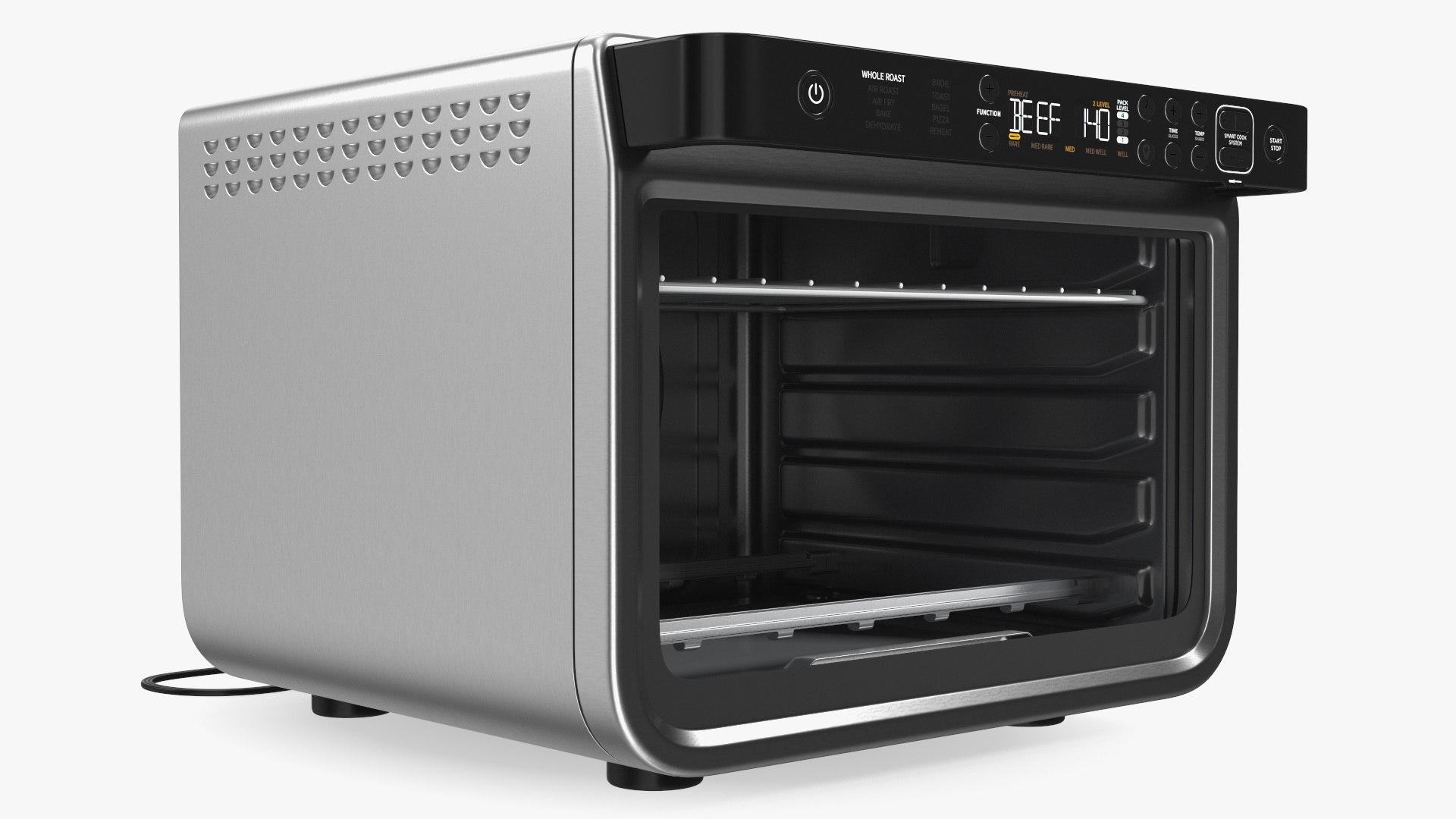
Define the product’s commercial position
Before requesting a quotation, document the following:
- Target market: North America, Europe, the Middle East, or another destination, including the applicable electrical and regulatory requirements.
- Sales channel: Retail distribution, e-commerce, private label, or an established appliance brand.
- Target retail price: The intended consumer price and the margin required by each channel partner.
- Target factory cost: The acceptable manufacturing cost, with a clear definition of included accessories, packaging, testing, and other charges.
- Annual demand: Forecast volume, initial order quantity, and likely reorder frequency.
- Product positioning: Compact convenience, family cooking, premium design, multifunctionality, or another defined advantage.
- Launch schedule: Sample approval, compliance testing, packaging approval, first shipment, and retail launch dates.
These details help the manufacturer distinguish between a product that is technically possible and one that makes financial sense.
For example, a brand targeting a crowded entry-level segment may be better served by adapting an established platform than by paying for entirely new tooling. A premium brand with a strong reason to differentiate may find that investment in a new enclosure or control interface is justified.
The important point is to agree on the commercial objective before engineering work expands.
2. Choose the Right Development Model: OEM, ODM, or a Hybrid
The manufacturing model affects development time, engineering responsibility, intellectual property, tooling investment, and the amount of customization available.
OEM and ODM are not simply two labels for the same service. Buyers should understand what the factory already owns or has validated, what the buyer needs to develop, and which costs will be shared across future product variants.
| Development model | What can be customized | Main commercial advantage | Main trade-off | Best suited to |
|---|---|---|---|---|
| Private label | Branding, selected colors, packaging, and available accessories | Fast entry with limited engineering changes | Less product differentiation | Distributors and new brands |
| Platform-based ODM | Appearance, selected functions, interface, and accessory configuration | Balances customization with reuse of existing engineering | Core architecture may remain restricted | Importers and established retailers |
| Custom OEM | Product specifications and design direction, subject to the agreed development scope | Greater control over product identity | Higher development costs and more validation work | Brands pursuing distinctive products |
| Hybrid development | Existing core platform with selected new structural or functional features | Concentrates investment on features that matter | Requires careful compatibility and change review | Brands seeking differentiation without rebuilding everything |
A hybrid approach often deserves more consideration than buyers initially give it. The heating system, basic cavity, and control architecture may be retained while the brand invests in a new fascia, handle, finish, user interface, or accessory package.
That can reduce duplicated engineering work, although every modification still needs an appropriate review and validation.
Linden’s air fryer oven OEM/ODM development services provide a starting point for discussing platform adaptation, design customization, control interfaces, and retail packaging.
Ask what is already validated
A supplier’s existing model should not automatically be treated as a production-ready solution for every market or configuration.
Ask which elements have already been tested, which changes would affect the test results, and whether the proposed design uses the same electrical components, heating arrangement, enclosure, software, and accessories as the existing model.
A color change and a redesigned door may look equally simple on a quotation. Their engineering implications can be very different.
3. Translate the Product Brief Into Engineering Specifications
Once the commercial direction is agreed, the next step is to turn broad expectations into measurable requirements.
Terms such as fast cooking, even browning, large capacity, and easy to clean are useful during concept development. They are not adequate acceptance criteria for a production order.
Specify capacity and usable cooking space
Nominal capacity alone does not tell a buyer how much food can be prepared in practice.
The design team should evaluate:
- Internal cavity dimensions and usable rack area.
- Number of rack positions and clearance between levels.
- Maximum dimensions of trays, baskets, and other accessories.
- Door opening angle and loading clearance.
- Space required for cleaning and removing accessories.
- External dimensions, ventilation clearance, and storage requirements.
A larger cavity can support more food, but it can also increase the product’s footprint, heating demand, packaging size, and freight volume.
The goal is not to maximize capacity at any cost. It is to provide the usable cooking space that matches the intended customer and price point.
Define heating and cooking performance
Cooking performance depends on several interacting variables: heating-element placement, fan characteristics, airflow paths, cavity geometry, rack spacing, control algorithms, and the food being prepared.
The product brief should identify which performance outcomes matter most and how they will be measured.
| Engineering area | What to define | What to verify during development |
|---|---|---|
| Heating system | Element arrangement, rated power, and heating strategy | Warm-up behavior and temperature response |
| Airflow | Fan configuration and air circulation path | Browning consistency across rack positions |
| Temperature control | Setpoint range, sensor location, and control logic | Temperature stability under defined test conditions |
| Cooking programs | Required modes, time ranges, and temperature settings | Repeatability of selected cooking tests |
| User interface | Buttons, knobs, touch controls, display, and language | Usability, response, and error handling |
| Accessories | Basket, tray, rack, rotisserie, or other attachments | Fit, durability, cleaning, and functional compatibility |
A single empty-cavity temperature reading cannot demonstrate consistent cooking performance. The manufacturer and buyer should agree on the test method, measurement locations, load conditions, preheating procedure, and acceptance limits.
For a multi-rack model, testing should also consider whether the upper and lower levels produce acceptable results under representative loads. If users must constantly rotate trays to obtain the expected result, the product may not deliver the experience promised by its marketing.
Decide which features deserve investment
Multifunctionality can help differentiate an air fryer oven, but each additional feature may introduce components, controls, assembly steps, testing requirements, or service considerations.
A useful development exercise is to classify features into three groups:
- Market requirements: Functions customers expect at the target price.
- Differentiating features: Capabilities that give buyers a clear reason to choose the product.
- Optional features: Additions that increase complexity without a demonstrated commercial benefit.
For example, a rotisserie system may be valuable for a family-oriented oven, while a compact model aimed at small kitchens may benefit more from a smaller footprint and simple controls.
Linden’s 6-in-1 AE3002 air fryer oven is a relevant reference when evaluating a multifunctional product direction. The final function list should still be based on the requirements of the proposed model rather than copied from an existing product.
4. Develop the Industrial Design Around Manufacturing Constraints
The appearance of a custom air fryer oven helps establish its market identity. However, design decisions also affect assembly, thermal performance, durability, cleaning, and production cost.
This is where design-for-manufacturing (DFM) review becomes valuable.
Review the enclosure, door, and control panel
The enclosure should accommodate the required cavity, insulation, ventilation, electrical components, and assembly sequence. The door must provide suitable access while maintaining acceptable alignment and closure throughout normal use.
Glass size and shape, hinge design, handle construction, surface finish, and control-panel placement can all influence cost and reliability.
A custom fascia may appear to be a cosmetic change, but it can affect control-board mounting, display visibility, wiring, assembly tolerances, and the distance between the user and hot surfaces.
Before approving tooling, ask the engineering team to review:
- Part dimensions and assembly tolerances.
- Material selection and thickness.
- Fastener access and serviceability.
- Thermal clearances and ventilation.
- Door alignment and hinge durability.
- Surface-finish consistency and scratch resistance.
- Access to components that may require repair.
The earlier these questions are resolved, the less likely the project is to require expensive modifications after samples or tooling have been approved.
Evaluate the user interface as part of the product
A touchscreen may create a premium appearance, but it is not automatically better than mechanical knobs or a hybrid interface.
Consider the user’s cooking habits, expected product price, display visibility, glove-free operation, cleaning needs, and the clarity of the selected programs.
For export products, language selection and regional conventions also matter. A control panel that works for one market may require revised graphics, software, or instructions for another.
Linden’s double-oven air fryer model AA1605H can serve as a reference for discussing a more differentiated product configuration. Any new dual-cavity concept should be evaluated for independent or shared controls, heat management, usable capacity, and manufacturing complexity before its specification is finalized.
5. Build and Test Prototypes With a Clear Purpose
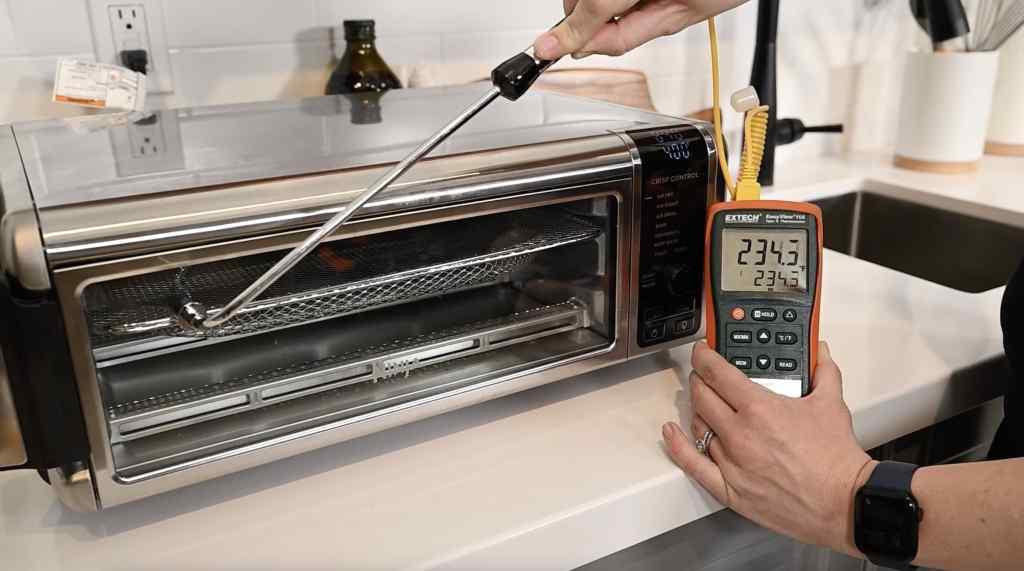
A prototype is not a single universal checkpoint. Different sample stages answer different questions, and expecting one sample to prove everything can create unnecessary delays.
A useful process separates appearance evaluation, functional verification, engineering validation, and production readiness.
Stage 1: Concept and appearance sample
The first sample helps buyers evaluate the overall form, proportions, colors, materials, logo placement, control-panel layout, and perceived product quality.
At this stage, the main question is whether the product direction is correct. If the design is still changing substantially, expensive tooling and full certification testing may be premature.
Stage 2: Functional prototype
The functional sample should demonstrate the intended operation of the heating system, controls, fan, door, accessories, and cooking programs.
Testing should identify issues such as unstable temperature control, excessive noise, difficult cleaning, poor accessory fit, and uneven cooking results.
Record each issue with a reference number, observation, severity, proposed corrective action, and retest result. This creates a usable engineering history rather than relying on informal feedback.
Stage 3: Engineering validation sample
A more representative engineering sample should verify the product against agreed specifications and identify potential safety, reliability, and manufacturing risks.
Depending on the design, this may involve:
- Temperature distribution and repeatability testing.
- Electrical safety and abnormal-operation checks.
- Surface-temperature measurements.
- Door, handle, hinge, and accessory durability.
- Control-system stability and fault handling.
- Cleaning and usability evaluation.
- Preliminary packaging and transit testing.
The precise test plan depends on the product construction, destination market, applicable standards, and intended use.
Stage 4: Golden sample and pre-production build
The approved golden sample establishes the agreed reference for appearance, configuration, and performance. It should be accompanied by controlled specifications, the bill of materials (BOM), approved artwork, and inspection criteria.
The pre-production build then checks whether the factory can reproduce that reference using the intended components, tooling, work instructions, and assembly process.
A prototype that performs well after extensive engineering adjustment is not sufficient evidence that the same result can be achieved repeatedly on a production line.
Buyer recommendation: Give every sample round a defined purpose, an approval owner, and written exit criteria. This makes feedback easier to interpret and reduces the risk of repeated sampling caused by changing expectations.
6. Plan Compliance and Safety Before the Design Is Frozen
Compliance should be part of product development from the beginning, not a task postponed until the first bulk order is ready.
The applicable requirements depend on the destination market, appliance classification, product construction, intended use, and the claims made by the brand. A certificate or test report for one model does not automatically cover a modified model.
For household air fryer ovens, the IEC 60335-2-9 standard addresses safety requirements for grills, toasters, and similar portable cooking appliances, including air fryers and ovens with forced-air circulation. Buyers should confirm the applicable edition, related general safety requirements, and local certification route with a qualified testing body.
Build a market-specific compliance plan
For each target market, establish a compliance matrix that identifies the required approvals, responsible parties, test samples, documentation, and expected timing.
| Area | Questions to resolve | Potential development impact |
|---|---|---|
| Electrical safety | What voltage, frequency, plug, grounding, and protection requirements apply? | Component selection and electrical design |
| Thermal safety | What surface temperatures, clearances, and abnormal-operation conditions must be assessed? | Insulation, enclosure, and ventilation changes |
| Electromagnetic compatibility | Which emissions and immunity requirements apply? | Control-board design and filtering |
| Food-contact materials | Are materials and coatings suitable for their intended food-contact conditions? | Material selection and supplier documentation |
| Labels and manuals | Which ratings, warnings, languages, and instructions are required? | Artwork and packaging revisions |
| Product-specific certification | Which tests, reports, and approvals are required in the destination market? | Testing schedule and launch readiness |
Food-contact compliance deserves particular care. The US FDA explains that the regulatory status of food-contact materials depends on the substances involved and their authorized conditions of use. Its guidance on determining the regulatory status of food-contact materials is a useful starting point.
Do not assume that a supplier’s general statement that a material is “FDA approved” proves compliance for every coating, component, manufacturer, or intended use. Request the relevant documentation and confirm its scope.
The same principle applies to CE, ETL, UL, CB, RoHS, and other compliance-related terms. Their applicability and meaning differ. Some concern product safety or conformity assessment, while others address different regulatory or material requirements. They should not be treated as interchangeable badges.
Control design changes after testing
Suppose an engineering sample passes its planned tests, but the buyer later requests a different heating element, a new door construction, or a modified control board to reduce cost.
That change may affect the original evidence. The supplier should assess the impact before implementing it, document the revised configuration, and arrange additional testing when necessary.
A practical rule is to freeze the compliance-relevant construction before final approval. Any subsequent change should go through formal engineering review rather than being treated as a routine purchasing adjustment.
7. Calculate the Real Development Cost, Not Just the Unit Price
The quoted factory price is only one part of the investment required to launch a custom air fryer oven.
A more useful calculation separates one-time development costs from recurring manufacturing costs and market-entry expenses.
What drives the cost of a custom air fryer oven?
| Cost category | Main cost drivers | Questions to ask the supplier |
|---|---|---|
| Engineering and design | Industrial design, structural development, software, and performance optimization | Which engineering activities are included in the quotation? |
| Tooling and fixtures | New molds, stamping tools, jigs, and assembly fixtures | Who owns the tooling, and what maintenance is required? |
| Components | Heating elements, motors, control boards, sensors, glass, and enclosure materials | Which parts are custom, and which can use established components? |
| Customization | Special colors, finishes, displays, functions, and accessories | What is the MOQ for each customization option? |
| Testing and compliance | Laboratory testing, sample preparation, reports, and certification-related work | Which costs are included, and which are charged separately? |
| Packaging | Retail boxes, protective inserts, manuals, labels, and master cartons | Has packaging been validated for the actual shipping route? |
| Production | Assembly labor, inspection, yield loss, and rework | What production assumptions support the quoted price? |
| Logistics | Freight, insurance, duties, and destination handling | What is the estimated total landed cost? |
Why the lowest quotation can become the most expensive option
A low unit price may depend on a high MOQ, limited customization, cheaper components, or assumptions that have not yet been validated. A higher quotation may include more engineering support, testing, or packaging work.
Neither price should be accepted at face value.
Consider two hypothetical quotations. Supplier A offers a lower unit price but excludes tooling and packaging validation. Supplier B quotes a higher unit price but includes more development support and a clearly defined quality plan. The right choice depends on the total investment, risk allocation, expected volume, and evidence provided by each supplier.
Then add the variable costs per unit. Include rework, expected quality losses, and other relevant expenses where reliable estimates are available.
This helps reveal whether a premium feature, new mold, or dedicated component is commercially justified.
Negotiate the cost structure, not only the price
Buyers can often make better progress by discussing the variables behind the quotation.
Ask whether the project can reuse an existing platform, whether custom colors require a separate MOQ, whether accessories can be consolidated, and whether a staged launch is commercially feasible.
A supplier should also explain the assumptions behind the quoted lead time. Tooling completion, component availability, compliance testing, and artwork approval can affect the schedule independently of the assembly cycle.
The goal is to find a cost structure that supports the intended product and reorder strategy, rather than obtaining a low initial price that becomes difficult to sustain.
8. Move From Engineering Approval to Controlled Mass Production
Mass production begins when the approved design can be reproduced consistently under normal factory conditions. It should not begin simply because a prototype has received positive feedback.
Before releasing the main order, the buyer and manufacturer should agree on a production readiness checklist.
Establish a documented production baseline
The production file should identify:
- Approved product specifications and drawings.
- The current BOM and approved component suppliers.
- Software and control-panel revisions, where applicable.
- Golden sample and appearance standards.
- Approved packaging artwork and carton specifications.
- Inspection procedures and acceptance criteria.
- Critical dimensions and functional test requirements.
- Approved deviations and engineering change procedures.
- Lot identification and traceability requirements.
These records reduce ambiguity between product development, purchasing, production, and quality teams.
A common source of trouble is the informal substitution of a component that appears equivalent but has different electrical, thermal, mechanical, or durability characteristics. Component substitutions should be reviewed against the agreed specifications before use.
Use a pilot production run to expose process problems
A pilot build should use production-intended materials, tooling, work instructions, and assembly methods as far as practicable.
The purpose is to identify problems that may not appear in a hand-built engineering sample.
During the pilot, examine:
- Assembly time and production bottlenecks.
- Component fit and dimensional variation.
- Wiring routing and connector security.
- Door, handle, and control-panel alignment.
- Functional test failures and rework.
- Appearance consistency between units.
- Packaging assembly and product protection.
- Inspection capacity and traceability records.
Record the number of units built, the defects found, corrective actions, and retest results. The sample size should be appropriate to the risks and production plan; a small successful run is not proof that every future batch will be defect-free.
If the pilot reveals a recurring problem, correct the process and repeat the relevant checks before releasing the full order.
Define quality control at every production stage
A supplier’s quality system should cover more than the final inspection.
Incoming Quality Control (IQC)
Verify incoming components and materials against specifications. Pay particular attention to safety-related parts, heating elements, control boards, wiring, glass, and other critical components.
In-Process Quality Control (IPQC)
Monitor assembly operations, wiring, component fit, fastening, and intermediate functional checks. Define what happens when a defect or process deviation is detected.
Final Quality Control (FQC)
Check the completed product against agreed criteria, including electrical and functional tests, appearance, accessories, labels, and the applicable sampling or inspection plan.
Outgoing Quality Control (OQC)
Confirm shipment quantity, packaging condition, carton markings, inspection records, and the required shipping documentation before release.
For buyers who cannot inspect every shipment in person, independent inspection can provide an additional check. Agree on the inspection standard, sampling plan, defect classifications, and acceptance limits before production begins.
An ISO 9001 quality management system can provide useful evidence of process discipline, but certification alone does not prove that a particular air fryer oven meets every agreed product specification. Buyers should review the manufacturer’s actual control procedures and product-level test records.
9. Design Packaging and Logistics Around the Finished Product
Packaging is part of the product development project because it affects transit damage, shipping cost, retail presentation, and the customer’s first experience with the appliance.
A custom air fryer oven may include a glass door, protruding handle, loose accessories, removable trays, and sensitive electronic controls. The package must protect these parts without adding unnecessary bulk.
Validate the complete shipping configuration
Review the retail box, protective inserts, master carton, accessory placement, and shipping marks together.
Testing should reflect the intended distribution route and the risks associated with handling, stacking, vibration, and drops. The exact test protocol should be agreed with the packaging engineer or qualified testing provider.
Before approval, confirm:
- Product dimensions and packaged weight.
- Accessory and manual placement.
- Protection for glass, handles, and external finishes.
- Carton strength and stacking requirements.
- Pallet configuration and container-loading plan.
- Barcode, label, and destination-market information.
For e-commerce products, packaging may also need to withstand parcel handling rather than relying entirely on palletized freight.
A box that looks good in a showroom is not necessarily a package that will protect the product during a long international shipment. Packaging approval should therefore be based on both appearance and documented performance.
10. How to Evaluate an Air Fryer Oven Manufacturer
The right manufacturing partner must support the product beyond the first sample. A supplier that is good at assembling existing models may not have the engineering resources to develop a substantially different heating system or enclosure.
Use a structured supplier evaluation rather than relying on the quotation or factory presentation alone.
| Evaluation area | Evidence to request | Warning sign |
|---|---|---|
| Engineering capability | Design review process, technical drawings, sample records, and problem-solving examples | The supplier accepts every specification without discussing feasibility |
| Platform suitability | Existing model specifications and a clear list of proposed modifications | Existing test evidence is presented as covering all future configurations |
| Compliance support | Relevant reports, certification scope, and market-specific plan | Broad certification claims without traceable documentation |
| Quality management | Inspection procedures, defect records, and corrective-action process | Quality control is described only as final inspection |
| Production readiness | Pilot plan, capacity assumptions, BOM control, and lead-time breakdown | The supplier cannot explain production bottlenecks |
| Commercial transparency | Tooling ownership, MOQ, payment terms, and cost breakdown | Important charges and assumptions remain undefined |
| Communication | Named project owner, milestone schedule, and written approval process | Decisions are repeatedly lost between sales and engineering |
The manufacturer’s own company and manufacturing information can be a starting point for understanding its product range and OEM/ODM capabilities. Buyers should still verify relevant claims through project-specific documentation, samples, factory discussions, and, where appropriate, an audit.
Also ask how the supplier handles warranty claims, replacement parts, engineering changes, and repeat orders. These matters become more important once the product has entered the market.
What Should Buyers Agree on Before Mass Production?
The most important milestone is not the date when the factory finishes the first production run. It is the point at which both parties can demonstrate that the approved product, production process, compliance scope, and commercial terms are aligned.
Before authorizing the main order, make sure the golden sample is approved, the BOM and software versions are controlled, the applicable compliance requirements are understood, packaging has been validated, and the pilot build has met its acceptance criteria.
The same discipline should apply to later orders. Changes in components, tooling, software, suppliers, or packaging should be reviewed and recorded so that a reorder remains consistent with the original approval.
If you are planning a new product or adapting an existing oven platform, Linden’s OEM/ODM team can be approached with the intended market, product concept, target volume, required functions, and launch schedule. A well-prepared brief gives both sides a clearer basis for evaluating feasibility, investment, and the next development milestone.
Frequently Asked Questions
How long does it take to develop a custom air fryer oven?
The timeline depends on the degree of customization, prototype revisions, tooling, component availability, testing, and production capacity. Adapting an existing platform is generally less complex than developing a new structure or heating system. Ask the supplier for a milestone-based schedule.
What is the difference between OEM and ODM air fryer ovens?
OEM development follows the buyer’s design and specification requirements, with the factory providing the agreed engineering and manufacturing support. ODM typically starts with an existing factory-developed platform that can be adapted to the buyer’s brand and selected requirements. The actual division of responsibilities depends on the contract.
What information does a manufacturer need to quote a custom air fryer oven?
A manufacturer typically needs the target market, capacity, power and voltage, cooking functions, design direction, accessories, order quantity, packaging requirements, compliance scope, and delivery schedule. Drawings or reference models help clarify the required level of customization.
Can an existing air fryer oven model be customized?
Yes. Depending on the platform, customization may include logo placement, color, finish, control-panel graphics, selected functions, accessories, and retail packaging. Structural, electrical, or heating-system changes require additional feasibility review and may require further testing.
What quality tests should be completed before mass production?
The test plan should reflect the product and target market. It may include electrical safety, temperature control, cooking performance, abnormal-operation checks, component durability, control stability, appearance inspection, and packaging validation. The manufacturer and buyer should agree on methods and acceptance criteria in advance.
How can buyers reduce the cost of custom air fryer oven development?
Start with a clear product brief, prioritize features with commercial value, and consider adapting an established platform. Confirm tooling ownership, customization MOQs, compliance costs, and packaging requirements before placing an order. Compare total project cost rather than unit price alone.
What should be included in an air fryer oven mass-production approval?
Approval should cover the golden sample, controlled BOM, drawings, software version where applicable, compliance evidence, approved packaging, inspection criteria, pilot production results, and documented deviations. These records establish the baseline for consistent production and future reorders.
A compact product can be a useful starting point for market-specific customization. For example, Linden’s smart air oven KE1204 provides a reference for evaluating a 12L multifunctional design with air frying, baking, roasting, toasting, and dehydrating capabilities.
