
Air fryer ovens have taken the kitchen world by storm, and for good reason. But scroll through e‑commerce reviews and social media, and you’ll notice something interesting: some people have used theirs for three to five years and it still looks brand new, while others complain about peeling coatings, strange odours, or loose doors within a year. Why such a big gap?
The answer lies in the parts you don’t see—materials and craftsmanship.
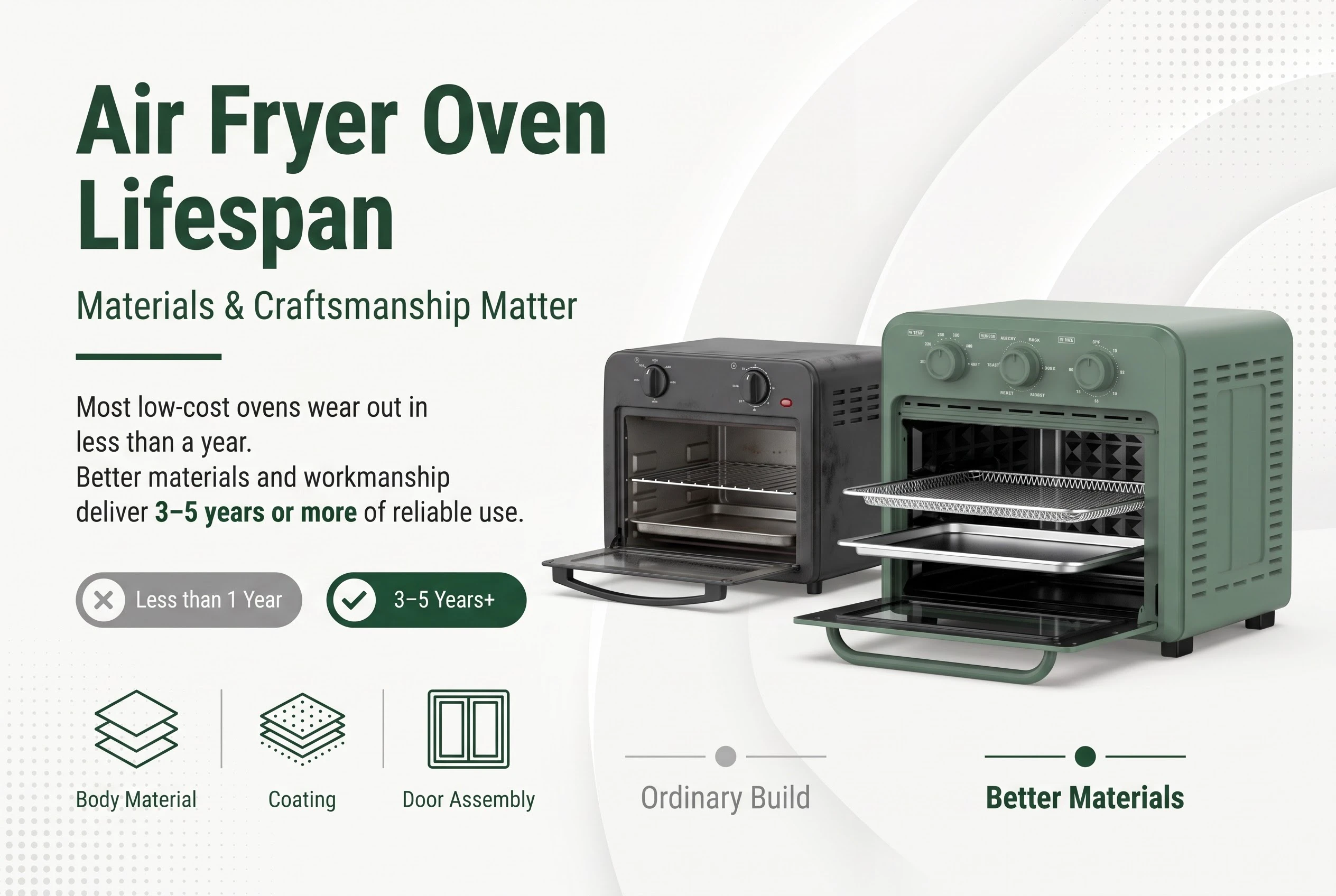
Table of Contents
1. The Cooking Cavity: The “Heart” of the Air Fryer Oven – Deciding Safety and Longevity
The cooking cavity is the core component that comes into direct contact with food and high temperatures. It’s also where the biggest differences in quality show up.
Stainless Steel Cavity: A Once‑and‑for‑All Choice
304 food‑grade stainless steel is currently the safest and most reliable cavity material. It resists high temperatures and corrosion, and does not release off‑flavours or harmful substances during prolonged heating. More importantly, there is no such thing as “coating peeling” – it is a single, homogeneous material that naturally forms a protective chromium oxide film, which can self‑repair even if scratched.
In terms of cleaning, stainless steel performs equally well. Grease does not adhere easily – a damp cloth wipes it clean, and even stubborn burnt spots can be handled with a steel wool pad without damaging the surface. Durability is unmatched: a high‑quality stainless steel cavity will not peel or yellow even after five or six years of regular use.
Of course, stainless steel is not flawless. Its physical non‑stick properties are inferior to coated cavities, so sticky foods like rice cakes or melted cheese require immediate cleaning while still warm. Additionally, some budget‑oriented products claim to have a “stainless steel cavity” but use plastic parts for the tray holders or hinges – these can degrade under prolonged high heat, which is a classic case of “half‑hearted material choices”.
Coated Cavity: The Coating Makes It – and Breaks It
Coated cavities are the most common type on the market, mainly divided into PTFE (Teflon) and ceramic coatings.
PTFE coatings are cheap and offer excellent non‑stick performance, which explains their widespread use. But the drawback is equally obvious – they scratch easily. Once scratched by steel wool or metal utensils, the coating can start to peel. When the coating is compromised, the underlying aluminium substrate is exposed. If you then cook acidic foods like tomatoes or lemons, aluminium may leach out and migrate into the food, posing potential health risks over time. Some reviews indicate that ordinary coated cavities tend to peel and yellow after just two to three years.
Ceramic coatings are primarily made of silicon dioxide (silica) and are naturally heat‑resistant – they won’t emit fumes even at 450°C, and they are free from PFOA, PFAS, and other harmful substances. However, ceramic coatings have their own Achilles’ heel: their physical abrasion resistance is actually weaker than that of high‑quality PTFE coatings. If you use metal utensils or steel wool on them, the non‑stick performance may start to decline within six months.
From a chemical perspective, stainless steel offers “stability inherent to its material structure”, while coatings provide “stability maintained by process conditions” – the former is born that way, the latter requires careful maintenance.
A Third Option: Enamel Interior
Enamel interiors are widely used in traditional ovens and have recently appeared in some high‑end air fryer ovens. They resist high temperatures, oxidation, and corrosion, conduct heat quickly, are not prone to oil adhesion, and are hard and scratch‑resistant. The downside is the risk of “chippage” – a localised flaking of the enamel if subjected to impact. In terms of durability priority, many experts rank enamel above stainless steel, and stainless steel above galvanised or aluminium‑plated materials.
2. The Glass Door: The First Line of Defence for Heat Insulation and Safety
Since air fryer ovens operate at high temperatures, the glass door plays a critical role in user safety and cooking performance.
Double‑layer glass doors are now standard in mid‑range and premium products. They not only create an insulating air layer between the two panes, effectively blocking heat transfer to the outside, but also lock heat inside the cavity for more even cooking. From a safety standpoint, double‑layer glass is much stronger and more shatter‑resistant – even if the inner pane cracks, the outer layer still provides protection.
Some models go a step further by adding insulation padding between the glass layers, enhancing heat retention even more. Combined with heat‑resistant handles and door‑open power‑cutoff designs, these features virtually eliminate burn risks.
In contrast, single‑layer glass doors fall far behind in both insulation and safety. Some users have reported feeling uneasy about the risk of glass shattering with older single‑layer models, and only felt at ease after upgrading to double‑layer.
3. The Outer Shell: The “Skeleton” You Don’t See Determines the Appliance’s Lifespan
The outer shell material and build quality are often overlooked by consumers, but they matter just as much to durability and safety.
A metal body offers obvious advantages: it is sturdy and resistant to deformation, dissipates heat effectively, retains heat well, and is safer under high temperatures. A full‑metal shell also avoids the problems of plastic housings – yellowing, brittleness, and odour release – after long‑term exposure to heat.
Plastic shells, especially those near the exhaust vents, are prone to heat‑induced deformation over time. Some users have reported that after about six months, the plastic near the vent started to yellow slightly, and occasionally emitted a faint “new plastic” smell. Worse still, if the heat dissipation design is poor, hot air can flow towards internal electronic components, leading to malfunctions and reducing the appliance’s lifespan.
A well‑designed shell also shows in the heat dissipation system. Dense cooling vents on both sides help keep the surface temperature low and protect internal components from overheating. A metal cavity combined with a well‑engineered airflow channel effectively controls the internal temperature, ensuring that electrical parts are not subjected to excessive heat stress.
4. Details That Are Often Overlooked
In addition to the three major components above, there are a few small details worth paying attention to:
Heating element material: 304 stainless steel heating tubes are more oxidation‑resistant and longer‑lasting than standard materials.
Accessory materials: Are the basket, grill rack, and baking tray all made of 304 stainless steel, or is only the cavity stainless steel while the accessories are coated or plastic? The latter is a classic sign of “surface‑level” cost‑cutting.
Craftsmanship precision: Does the basket fit snugly with the body? Any wobbling not only affects the feel during use but can also accelerate wear on the parts over time.
Summary
So, back to the original question: the quality and lifespan of an air fryer oven ultimately come down to materials and craftsmanship.
The cooking cavity is the top priority: 304 stainless steel offers the longest life and greatest safety, with no risk of coating peeling. Coated cavities are cheaper and more non‑stick, but they have a limited lifespan and require careful maintenance.
The glass door – choose double‑layer over single‑layer; the difference in insulation and safety is huge.
The outer shell – prioritise metal over plastic. Plastic may be more affordable, but its long‑term durability under high heat is questionable.
A truly good air fryer oven is one that stands up to scrutiny from the inside out – not just using quality materials where they’re visible, but also not cutting corners where they’re hidden. When shopping, just ask yourself: “What is the cavity material? Is the glass single or double‑layered? Is the shell metal or plastic?” – and you’ll avoid many pitfalls.
After all, kitchen appliances are something you may hesitate to pay more for at the time of purchase, but you’ll know the true value only after years of reliable use.
